– by Matthew Bennison Director MRICS, FAAV, MICFor
I get asked the same two questions almost every week:
‘Do I need a felling licence to take trees down on my own land?’
And
‘What grants can I claim if I want to manage what ‘s existing?’
Both come with the same honest answer: it depends. But ‘it depends’ isn’t all that useful on its own, so let me walk you through how we think about it as an organisation, where the rules sit, and where the real wins are.
When you need a felling licence - and when you don’t
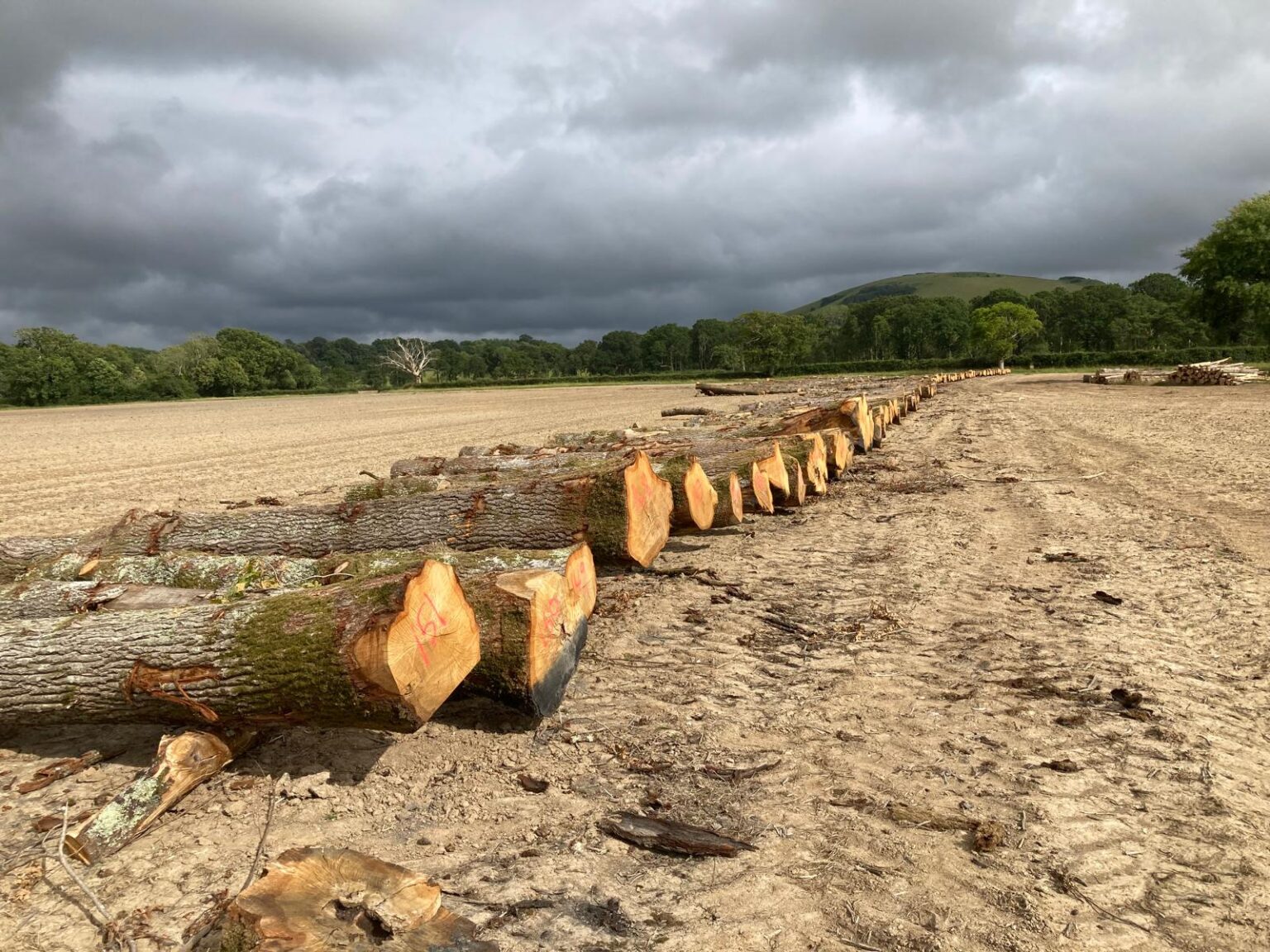
If you fell more than 5 cubic metres of timber per calendar quarter, the general rule is that you’ll need a felling licence from the Forestry Commission.
There are exemptions. Trees in a domestic garden, in a churchyard, trees below a certain size threshold, or trees being removed as part of an approved planning application can all sit outside the licence regime. If the council has already deemed a planning application acceptable, that can override the need for a separate licence.
What people don’t always realise is that the application isn’t just about volume. The Forestry Commission will want to know what kind of operation you’re carrying out, eg thinning, regeneration felling, clear felling. Each carries different implications, and you should expect the licence to come back with conditions attached. Most commonly, a restocking obligation.
England has a general rule against deforestation. The Forestry Commission is actively trying to grow the forested area, not shrink it. So, if your proposal looks like it would reduce coverage, they’ll insist that you replant. Part of an agent’s job is to negotiate sensibly within those conditions and make sure the restocking still works for what you’re trying to achieve.
Read the official guidance on when you need a tree felling licence.
Environmental Impact Assessment: don’t skip it
An Environmental Impact Assessment (EIA) comes up most often when you’re creating new woodland rather than felling existing trees. The principle is simple: if you change the habitat by planting trees, is the result better or worse for biodiversity?
In the UK, that matters because land isn’t all treated the same. Some areas are formally designated for their ecological importance – Sites of Special Scientific Interest (SSSIs) being the best-known example. In places like these, or on habitats such as species-rich acidic grassland, planting trees can actually do more harm than good.
The EIA process exists to make sure those decisions are properly thought through before anything is planted, preventing well-intentioned schemes from accidentally damaging habitats that are already valuable in their own right.
If you’re considering a new woodland creation scheme, check the Forestry Commission’s EIA guidance early and use the gov.uk service to check whether your land is in a protected area before you go any further. These questions are much easier to deal with at the start than after plans have been drawn up.
Real-world wins and a cautionary tale
At Evergreen Rural, we’re happy to say we’ve never had a felling licence refused. Partly that’s because we tend to push in the same direction as the Forestry Commission (we both want sustainable woodland) and partly because we structure the application properly from day one.
One example I’m particularly pleased with is a client who had a strip of woodland that had become a road safety hazard. Normally, the restocking condition is strict – replant in the same footprint. We argued the case for moving the new planting 20-30 metres back into the field, away from the road edge. Without taking that action, we’d be in exactly the same situation again in 30 years. It was the right outcome for the landowner and the right outcome for the road.
The cautionary tale runs the other way. Some property developers see felling licences as a loophole: clear the trees, then submit a planning application on what looks like a bare site. It doesn’t work. The Forestry Act is, in some respects, stricter than planning. A restocking obligation will hinder, or even stop in its tracks, any housing application on the cleared land.
Fines for felling without a licence have increased significantly in recent years, and the Forestry Commission has issued some of its highest penalties to date, including a well-publicised case around a pumping station in East Surrey that ran to several hundred thousand pounds. Check the current penalties on gov.uk before you act on assumptions.
Grants: where the world has changed
The second question is about what grants are out there for planting and management, and it’s one I’m much more excited to answer than I was even a few years ago.
One area we work particularly closely in is the Countryside Stewardship Higher Tier scheme for woodland management. The world has changed enormously here over the last few years. The old Basic Payment Scheme (BPS) used to give farmers and landowners around £220 per hectare for cross-compliance – essentially for being a sensible custodian. That’s now gone, and landowners felt it. For many estates, BPS really helped make the numbers work.
For farmers and landowners with woodland, Countryside Stewardship Higher Tier now fills a meaningful part of that gap. There’s a foundational woodland improvement payment of £127 per hectare. On top of that, you can bolt on grey squirrel management at £60 per hectare, deer management at £105 per hectare, plus resilience and supplementary payments.
These figures are subject to change, so check the current rates. In practice, we’re building schemes that turn over £300-£320 per hectare for clients doing work many of them were doing anyway.
We’ve signed clients into 10-year schemes that have transformed the economics of their estates. That, more than anything, is why I think this is an exciting time to be a forester. The Government is finally recognising what woodland does for biodiversity, and paying landowners properly to manage it.
Why applications get rejected
Rejection is rarely about ineligibility. Most of the time it’s about how the data is presented – supplying the appropriate information and putting the right paperwork in front of the right authority.
The administrative cost is a consideration. Post-Brexit, this is UK taxpayers’ money, and the scrutiny is tighter than it was under the old EU schemes. The biggest hold-up tends to be evidence-gathering: making sure the right surveys, baselines and supporting documents are in place before submission.
The other thing to flag is that these are long-term commitments. You aren’t signing up for 1 year – you’re signing up for 10 for Countryside Stewardship Higher Tier. If you’re not engaged with the management plan, you’ll get to year 5 having missed the required surveys and the recording of data, and the fines could follow.
That’s where our team adds the most value. Some of our clients love being on the chainsaw. They’re hands-on, in among it, and don’t want to be doing the paperwork. And that’s fine. We host the 6-monthly check-ins, keep the deer and squirrel records on track, and make sure the surveys are filed in years 1, 5 and 9. Think of us as the goalkeeper – there to make sure nothing gets past you that shouldn’t.
Where to start
If you’ve got a felling project in mind, a woodland you’re not sure how to manage, or you’re wondering whether grant funding could shift the economics of your estate, the practical first step is a conversation. We’ll look at what you’ve got, what you’re trying to achieve, and whether the schemes available stack up for your situation.
Get in touch with us and we’ll take it from there.
Useful Government Resources
- Forestry Commission
- Tree felling licence: when you need to apply
- Environmental Impact Assessments for woodland
- Check whether your land is in a protected area (SSSI etc.)
- England Woodland Creation Offer (EWCO)
- Countryside Stewardship Higher Tier
This article is intended as general guidance. Always check the most current rules and rates on gov.uk, or contact Evergreen Rural for advice tailored to your land and circumstances.